

Cart
0
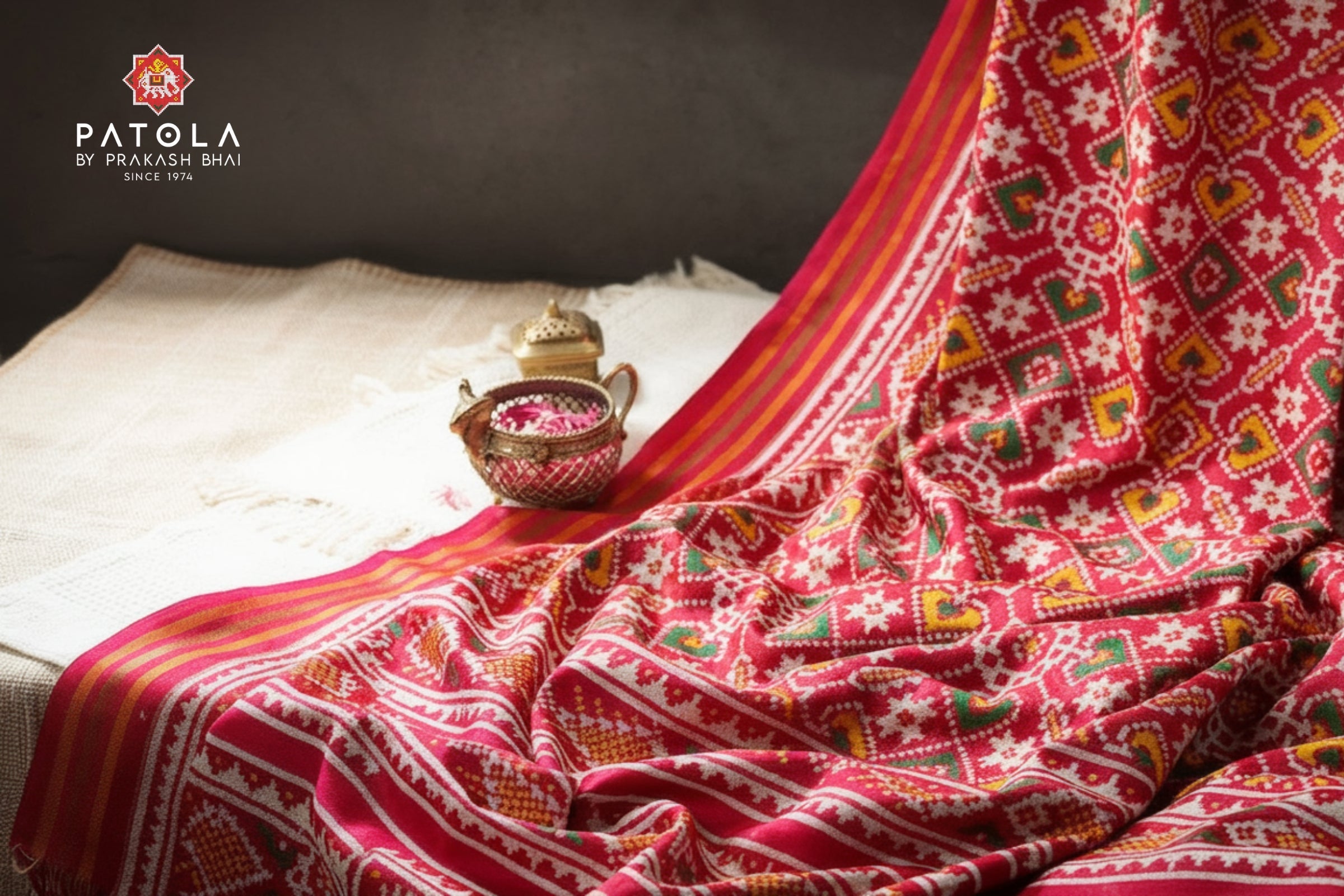
Patola is not just a saree — it is one of India’s most special handwoven textiles. Made with care, patience, and deep tradition, the Patola Saree is recognised by UNESCO for its cultural and artistic value.
Here are 5 simple reasons why Patola holds this honour.
1. Rare Double Ikat Weaving Technique
Patola is made using the double ikat method, where both the warp and weft threads are dyed before weaving.
The designs must match perfectly when woven — a task that needs extreme skill and accuracy. This rare technique is practiced by very few artisans in the world.
2. Passed Down Through Generations
Patola weaving is a family tradition. The skills are passed from one generation to the next through years of practice, not books or machines.
This living tradition is one of the main reasons UNESCO values Patola as a heritage craft.
3. Completely Handmade Process
From dyeing the threads to weaving the final saree, everything is done by hand.
No machines, no shortcuts — only time, patience, and skilled hands.
4. Strong Cultural Importance
Patola sarees have been worn for centuries during weddings, festivals, and religious ceremonies.
The motifs often represent prosperity, protection, and good fortune, giving the saree deep cultural meaning.
5. A Craft That Cannot Be Mass Produced
Even today, Patola cannot be made in factories. The precision needed in weaving depends entirely on human skill.
This makes every Patola saree unique and valuable.
More Than Fabric — A Heritage
UNESCO recognition celebrates Patola as a symbol of Indian craftsmanship, culture, and tradition.
Wearing a Patola is not just about style — it is about preserving a timeless art.

