

Cart
0
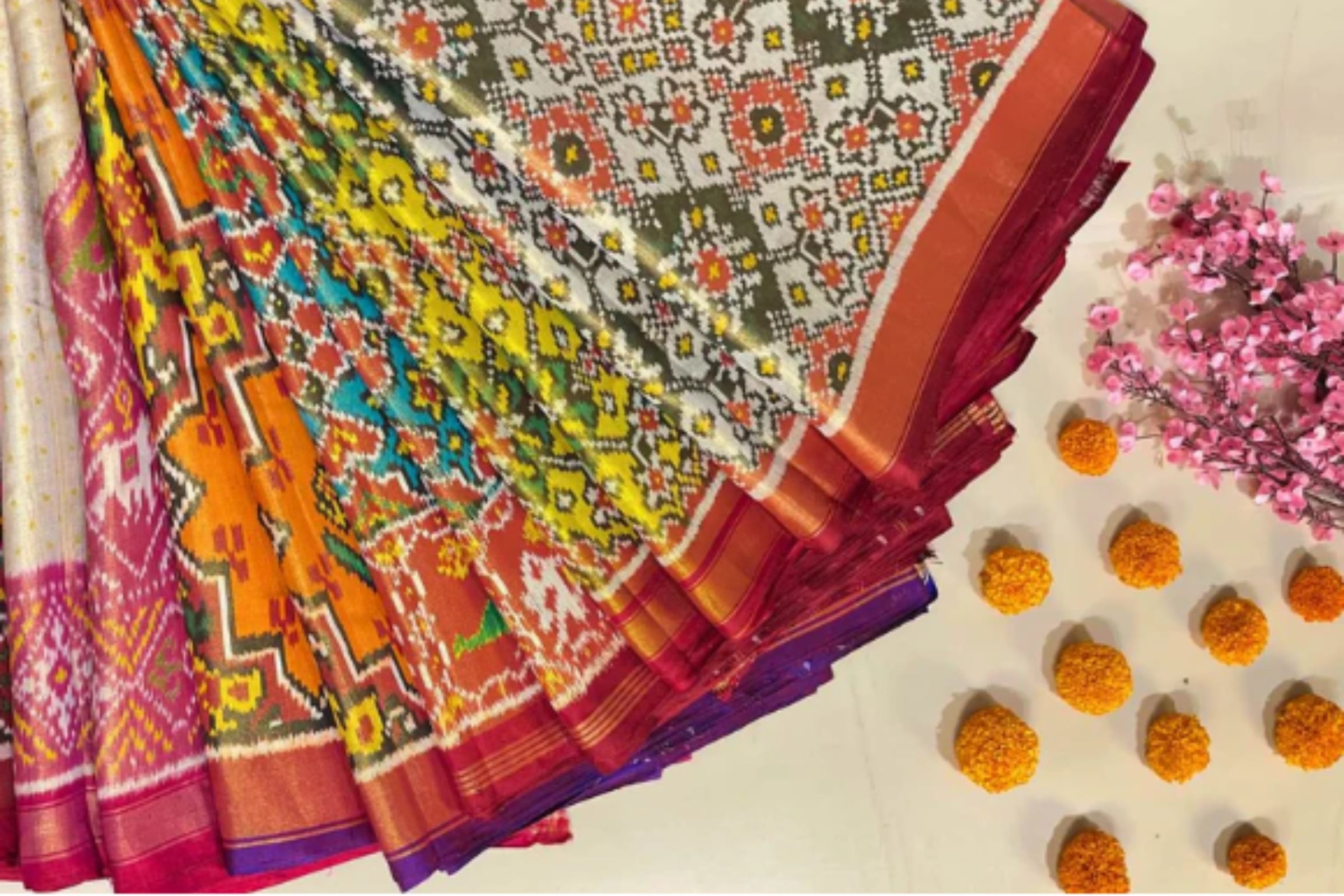
A Patola saree is more than just fabric — it’s art woven by skilled hands. Each piece carries the patience, precision, and passion of the artisan who created it. Owning one means owning a part of India’s centuries-old weaving heritage. Here’s how you can tell if yours is truly handwoven and authentic:
1. Look at Both Sides of the Saree
A true handwoven Patola looks the same on both sides.
The patterns and colours match perfectly front and back — because of the double ikat weaving.
Machine-made copies often have a faded or uneven back side.
2. Feel the Texture
Original Patola sarees are crafted from pure silk, resulting in a soft yet firm texture.
The weave feels slightly raised to the touch.
Fake ones may feel too smooth, stiff, or slippery due to synthetic threads.
3. Observe the Colours
Patola uses natural or vegetable dyes, giving rich but slightly earthy shades.
If the colours look too shiny, bright, or artificial, it’s likely machine-dyed.
Real Patola colours stay vibrant for years without fading.
4. Check the Patterns
Traditional Patola motifs include elephants, parrots, flowers, dancers, and geometric shapes.
Each motif is perfectly aligned — no smudges or overlaps.
Machine prints often show distortion or misalignment in the design.
5. Time and Price Tell a Story
Authentic Patola sarees take 6 months to 1 year to weave.
Because of this effort and craftsmanship, their price is higher.
If a saree is being sold very at a low price as “Patola,” it’s most likely not real.
6. Buy from Trusted Weavers
Purchase only from authentic Patola houses or recognised weavers.
Brands like Patola by Prakash Bhai are known for keeping the original tradition alive.

